LE PUR SANG DES AUTOMOBILES ✕ SOLITAIRE · 1 OF 1
DESTRIER
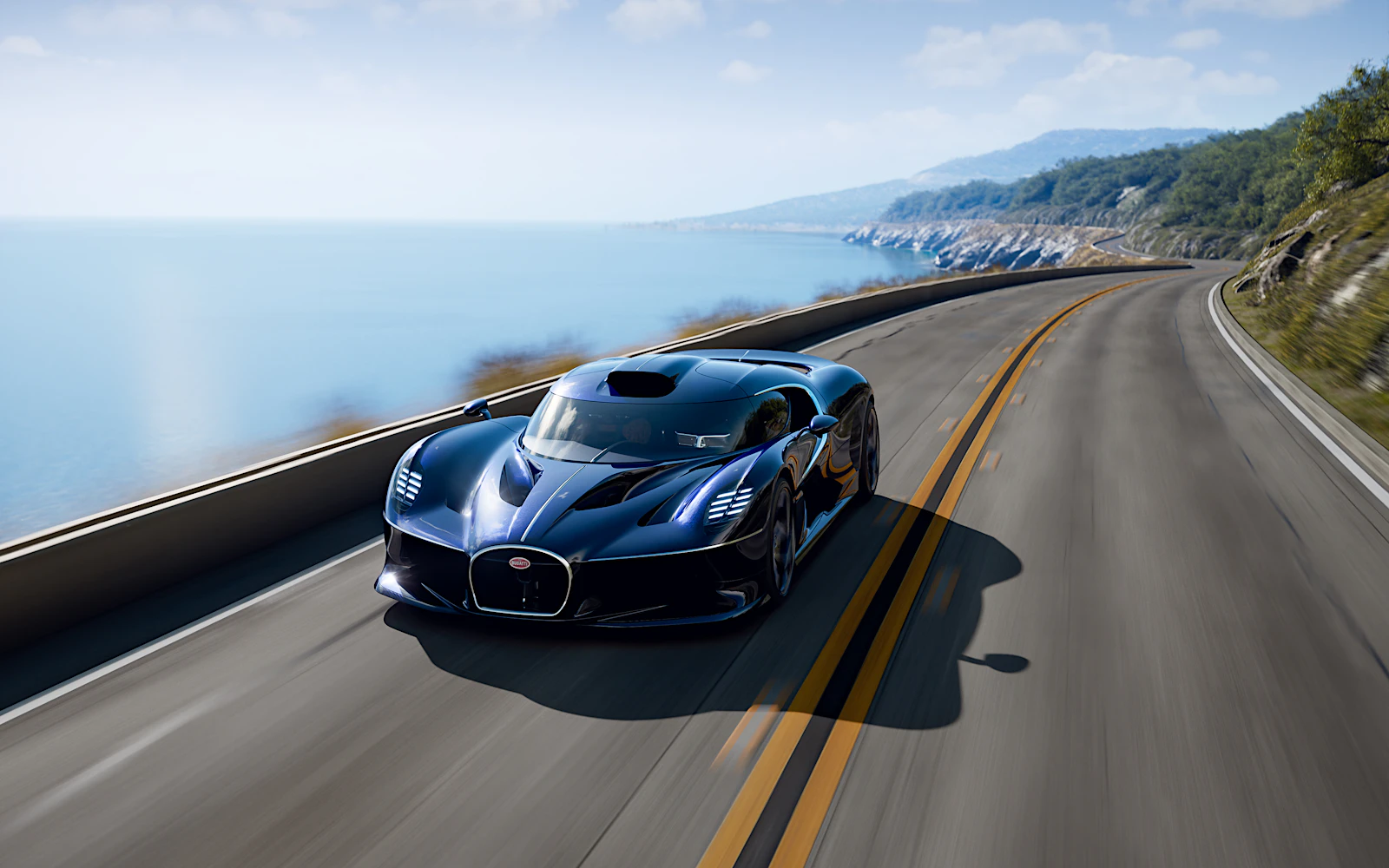
A Sculpture of Speed — one meter tall, stripped of every wing, vent and aerodynamic appendage. The Bolide, freed to speak as pure proportion.
One chassis, two masterpieces一副底盘,两个杰作
Can a race car and a work of art share one foundation? The Type 57 already answered.
In 1937 and 1939, the Type 57 chassis won Le Mans outright in the streamlined 57G "Tank". The very same foundation underpinned the 57SC Atlantic — widely regarded as the most beautiful car ever built.
Destrier and Bolide continue that tradition: one chassis, two entirely different expressions. Above the windscreen, a hand-laser-engraved plate depicts both the 57G Tank and the Atlantic — the bond made permanent.
The third one-of-one of Programme Solitaire, after Brouillard and F.K.P. Hommage. Where its predecessors grew from emotive stories steeped in history, the Destrier works the other way around: no story to lean on — instinct and emotion, shaped directly.
The Type 57 chassis
Two outright Le Mans winsThe streamlined Type 57G "Tank" racer won Le Mans 24 Hours twice.
Type 57SC Atlantic
The most beautiful car ever builtThe other masterpiece on the very same chassis — a design icon for the ages.
Destrier · Solitaire
The third one-of-oneFirst shown at the Pebble Beach Concours d'Elegance on August 16, 2026.
One meter tall一米的宣言
What if Bugatti's most extraordinary engineering package were left untouched by wings, vents and aerodynamic addenda?
The answer: proportion.
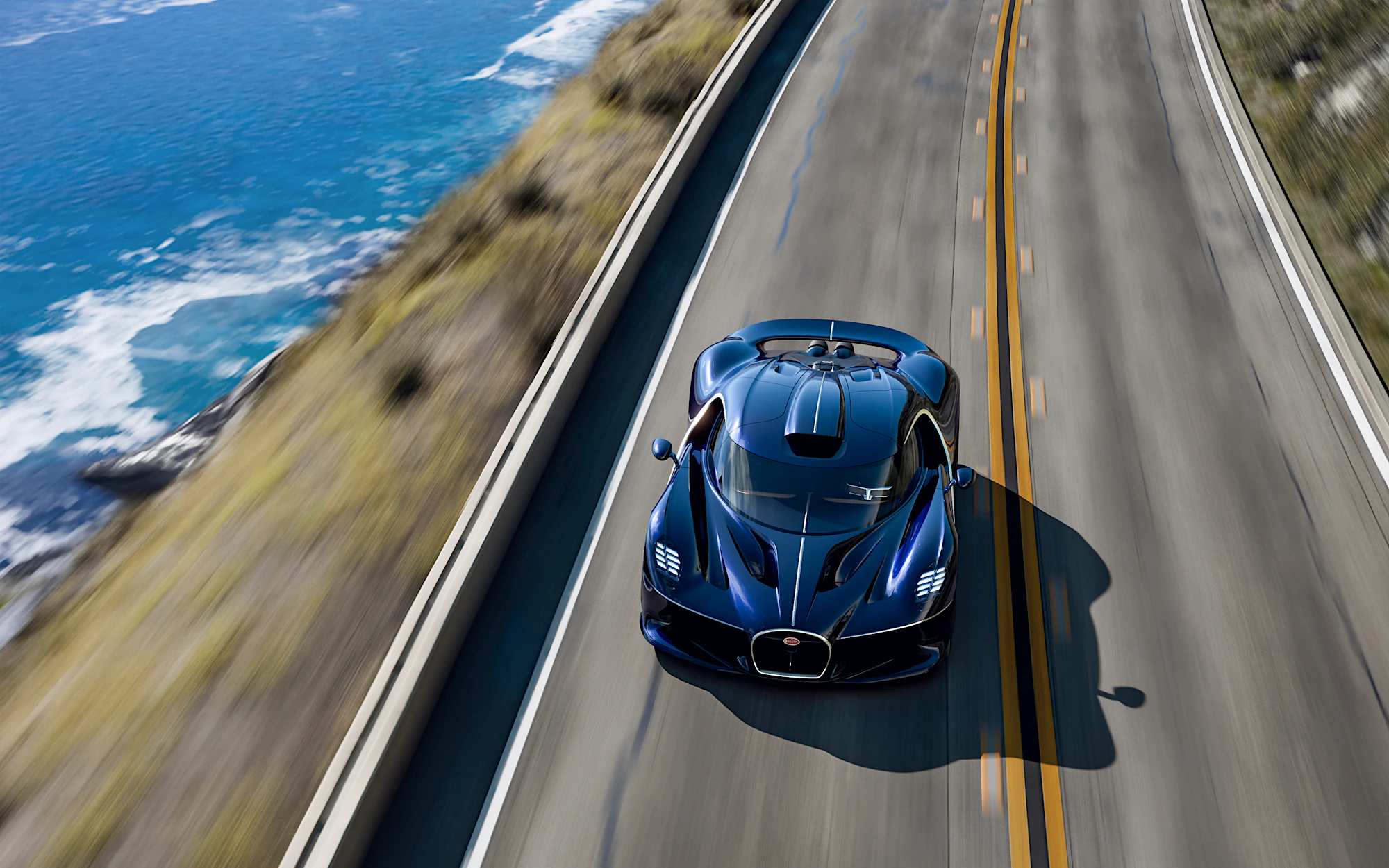
Stripped of every aerodynamic appendage, the body is reduced to pure volume — just one meter tall, dramatically lower than any other Bugatti. The cabin crouches low between the front wings, poised like a warhorse at a standstill.
Destrier is named after the finest and strongest horse of the medieval knight: not the heaviest, not the fastest — the one that could be trusted.
A sculpture in motion
Low, waisted, hipped — the stance is the Destrier's manifesto.

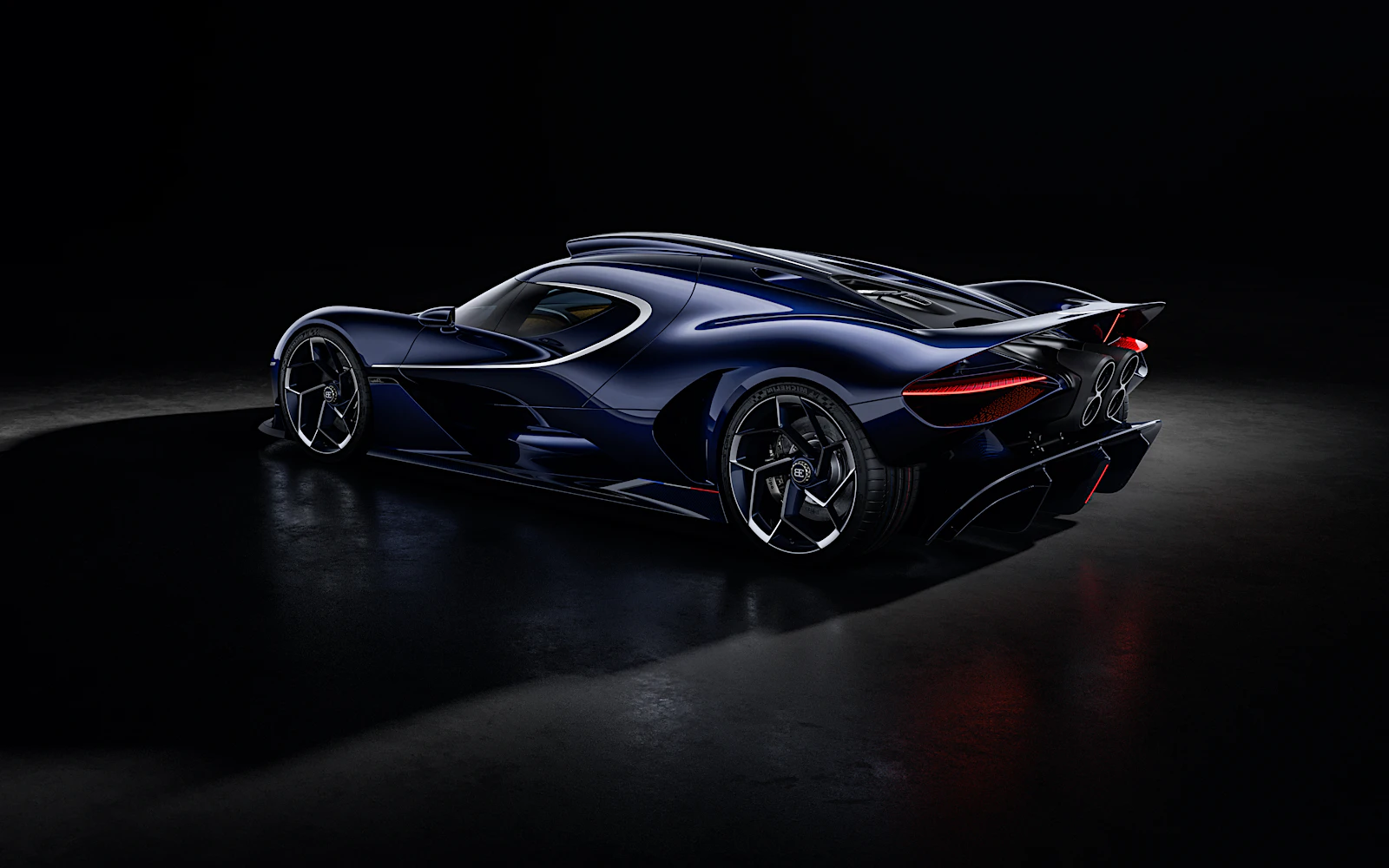
The breathing C-line呼吸的 C 线
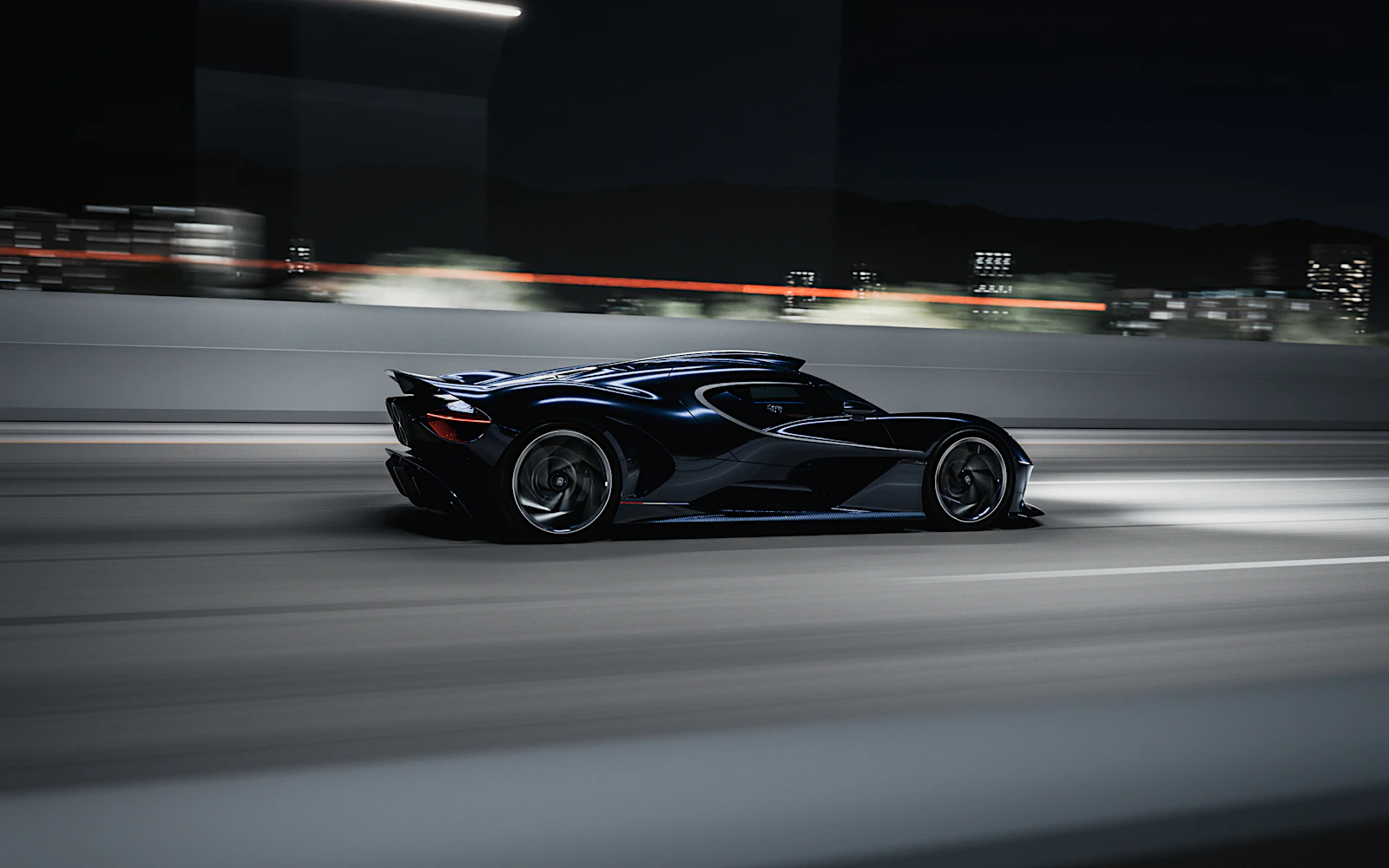
Traditionally an unbroken curve of brightwork — on the Destrier, it breathes.
Bugatti's C-line, traditionally an unbroken curve framing each side, now "breathes" on the Destrier.
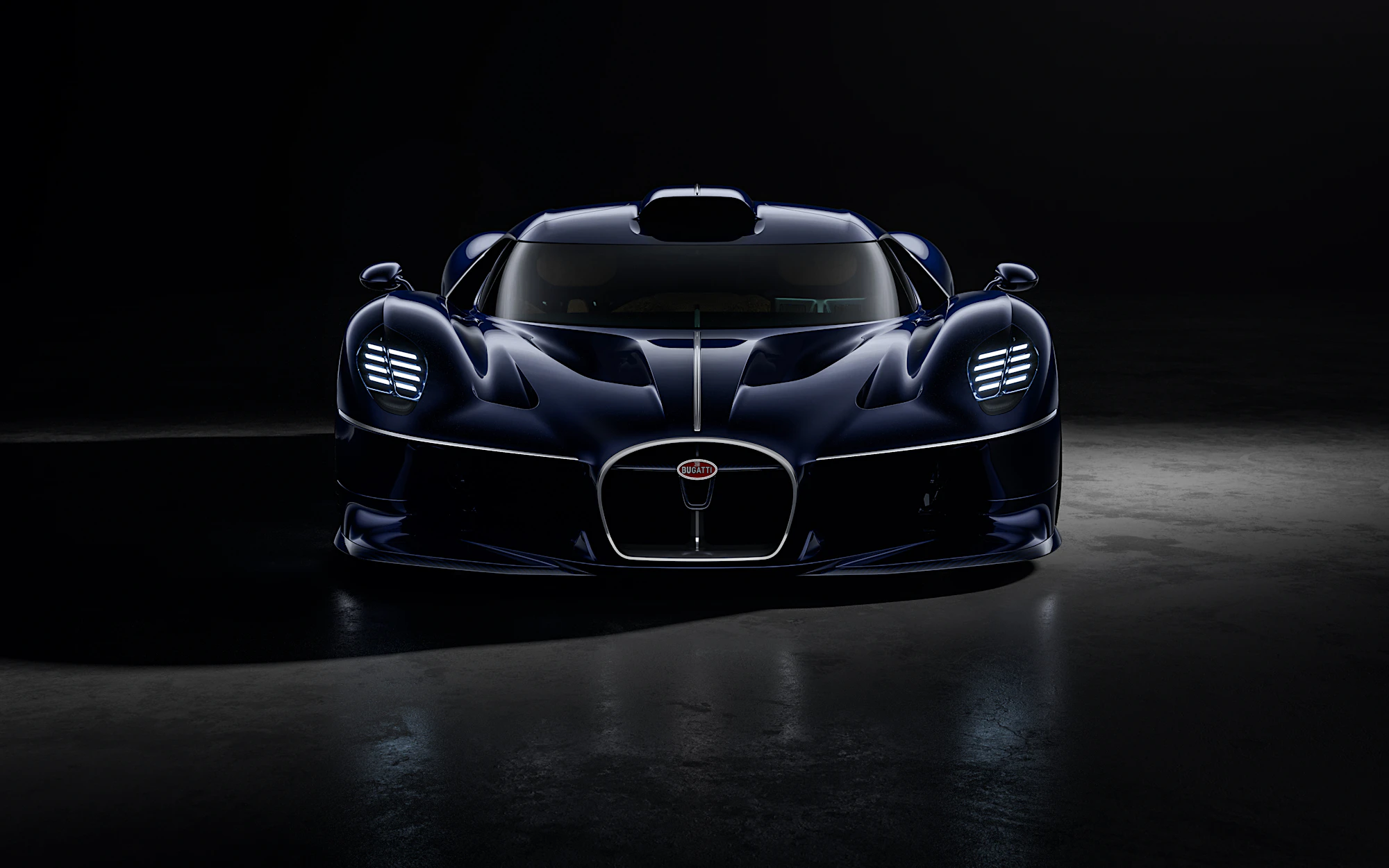
It pauses just before the front wheel well, letting bare bodywork show through, then resumes its path to meet a horseshoe grille wider than the Bolide's. At the rear, an elegant blended wing echoes the Chiron Profilée, closing the silhouette with quiet grace.


Destrier is not a car you understand with your head, it is a car you feel with your heart.

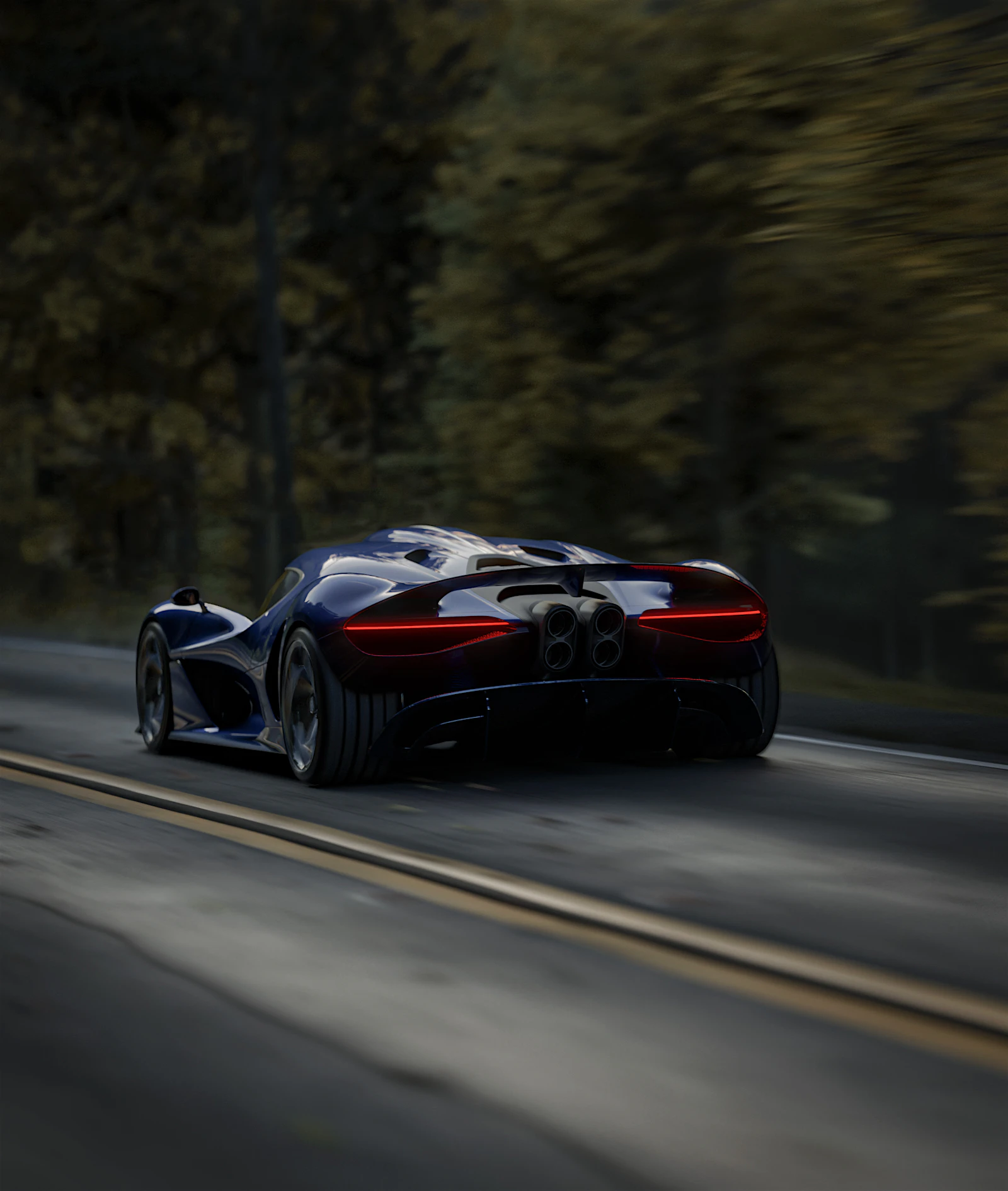
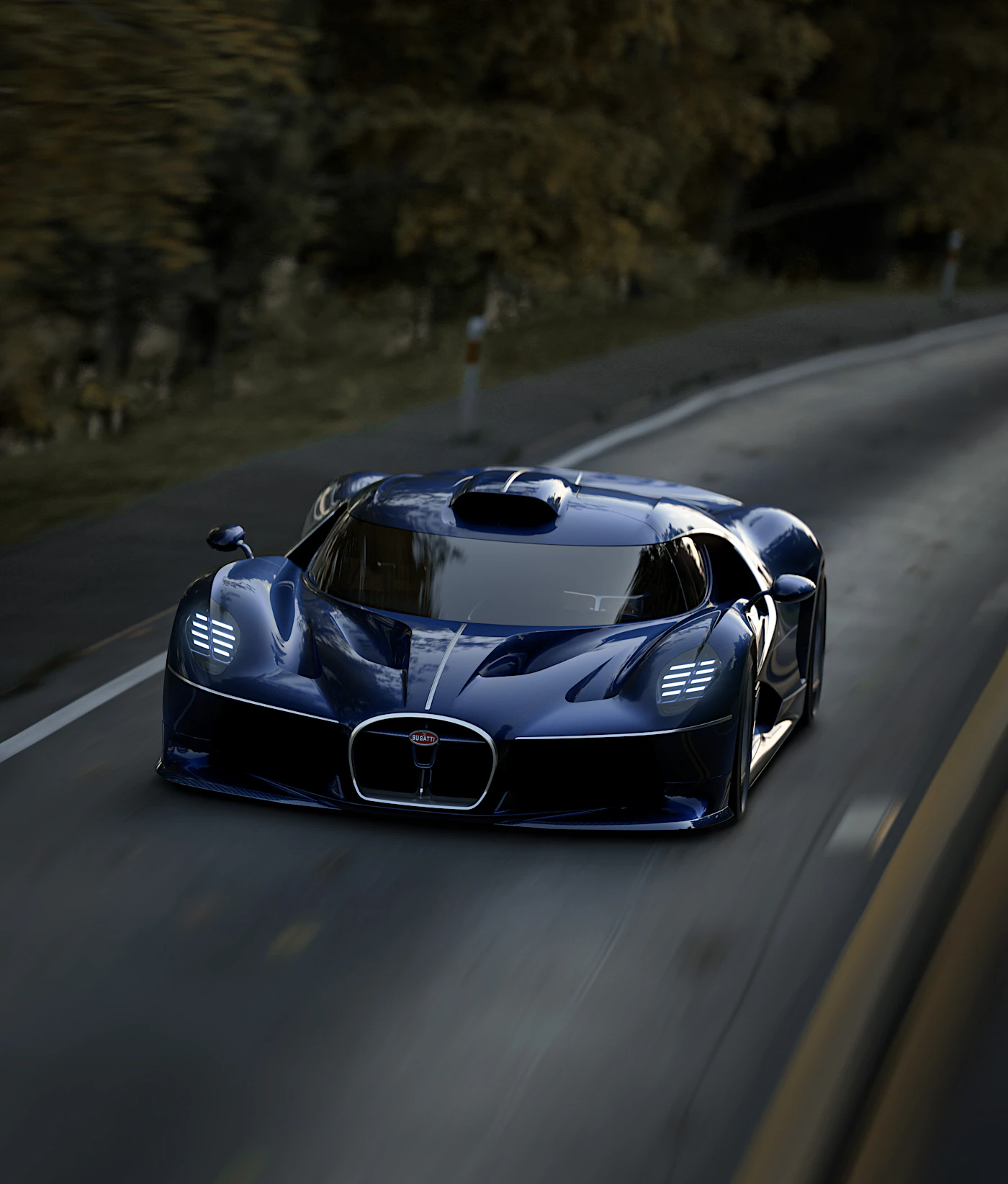
Sapphire CelesteThe Colour
The blue was not chosen at random — the celebrated "Pope" Atlantic originally wore blue.
A bespoke, multi-layered colour created exclusively for this car and its owner.
"Sapphire Celeste" shifts with the light to reveal the full depth of the bodywork's volumes. Diamond-inspired sparkle flickers as light sweeps across; polished aluminum brightwork contrasts the refined hue.
An echo of history, in colour.
The Type 57SC Atlantic, chassis 57591 — the celebrated "Pope" Atlantic — originally wore blue, before being repainted black by its current owner. Destrier's blue is a quiet nod to that lineage.
Exposed carbon fiber is limited to the front splitter and rear diffuser, tinted to match.
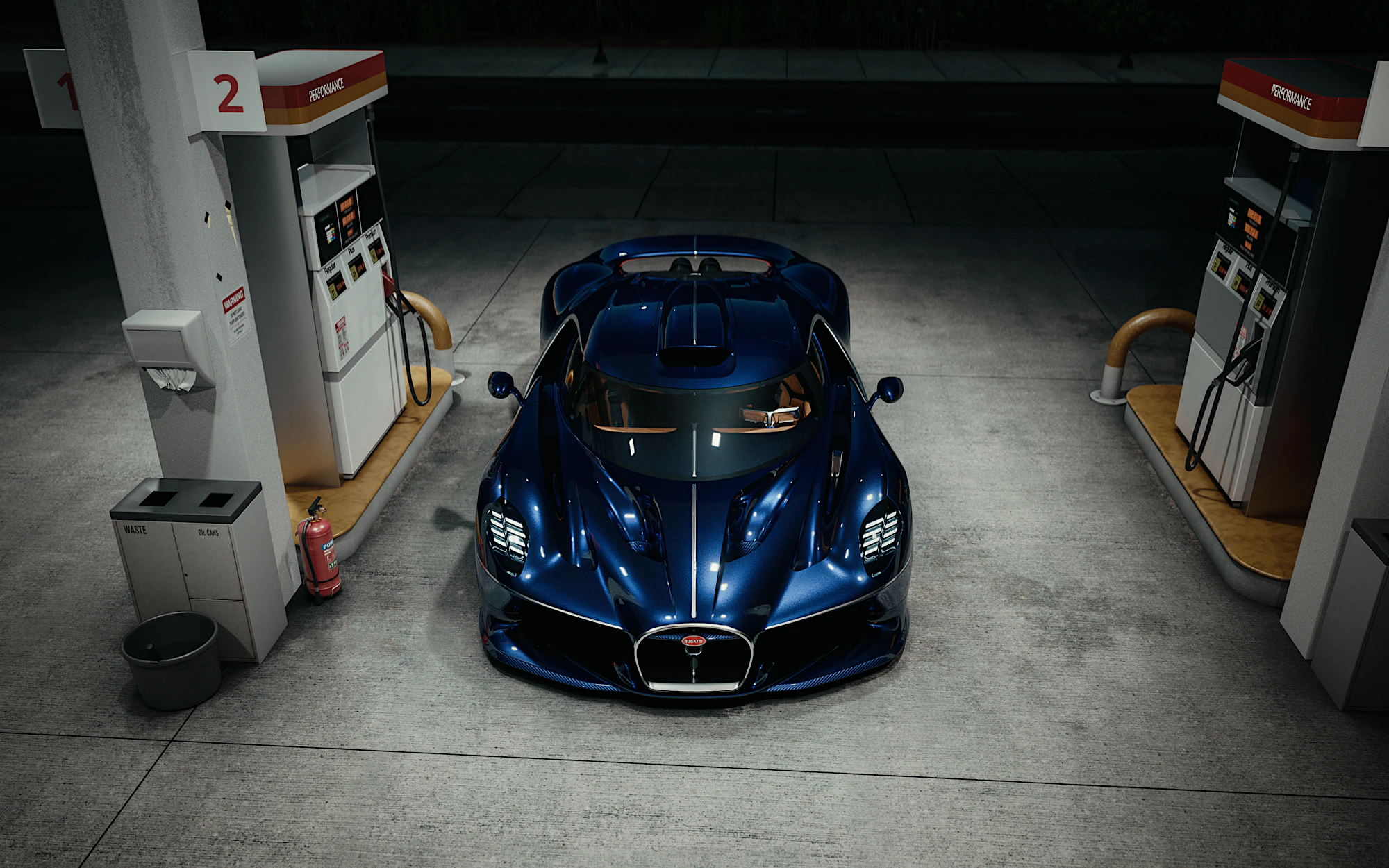
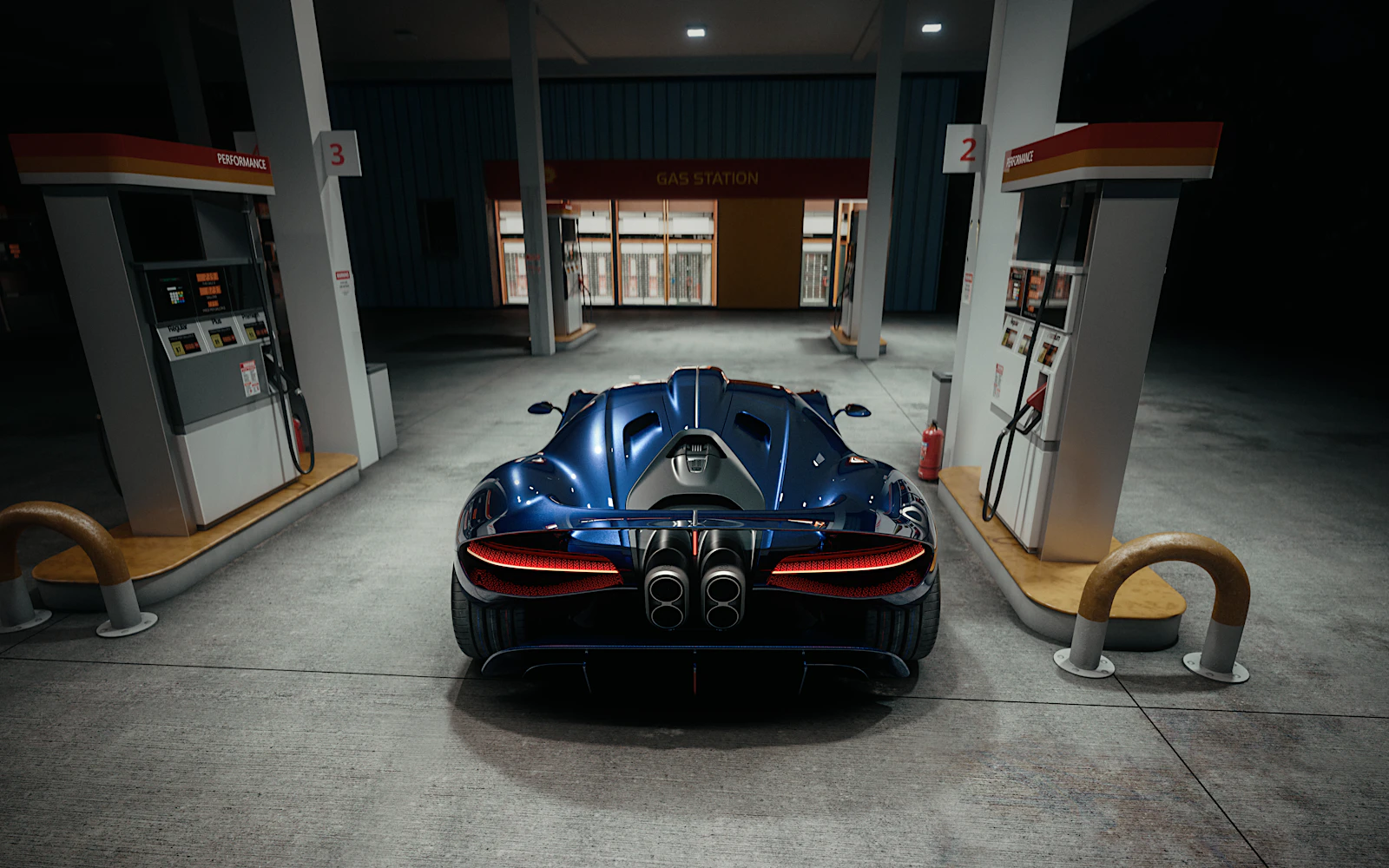
A tailor's atelier裁缝的工坊
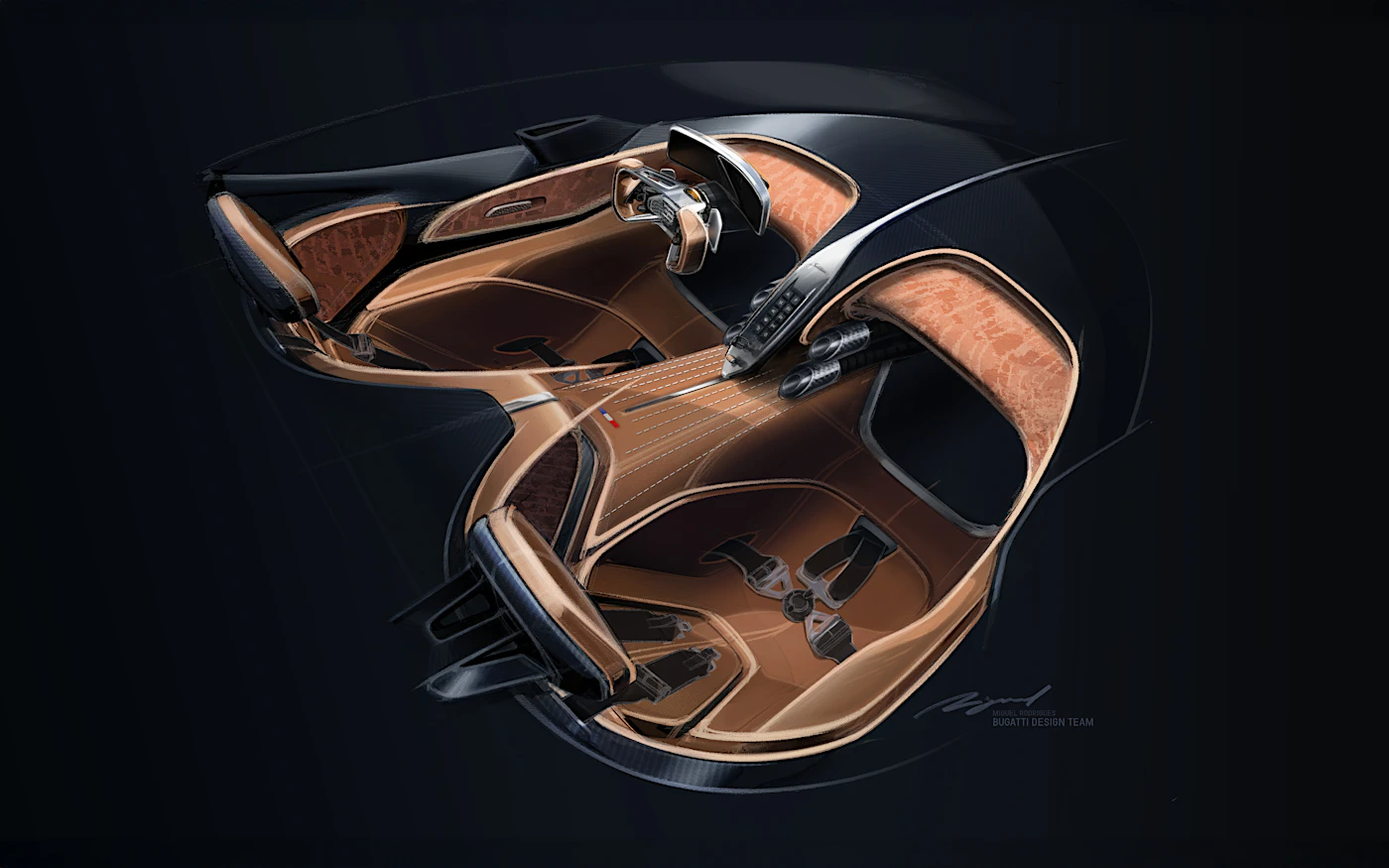
The cabin leaves the Bolide's motorsport cockpit far behind — three materials define it.
Every material was chosen the way a tailor selects cloth.
"Ambre Voyageur" leather and nubuck — a timeless warm brown — plus an advanced 3D-knitted textile: seamless, three-dimensional surfaces as technical as they are tactile. Copper yarns run through it as a circular "halo-line" around the cabin. The hammered brightwork returns at four touchpoints: door opener, air vents, steering wheel hub, entry plate.
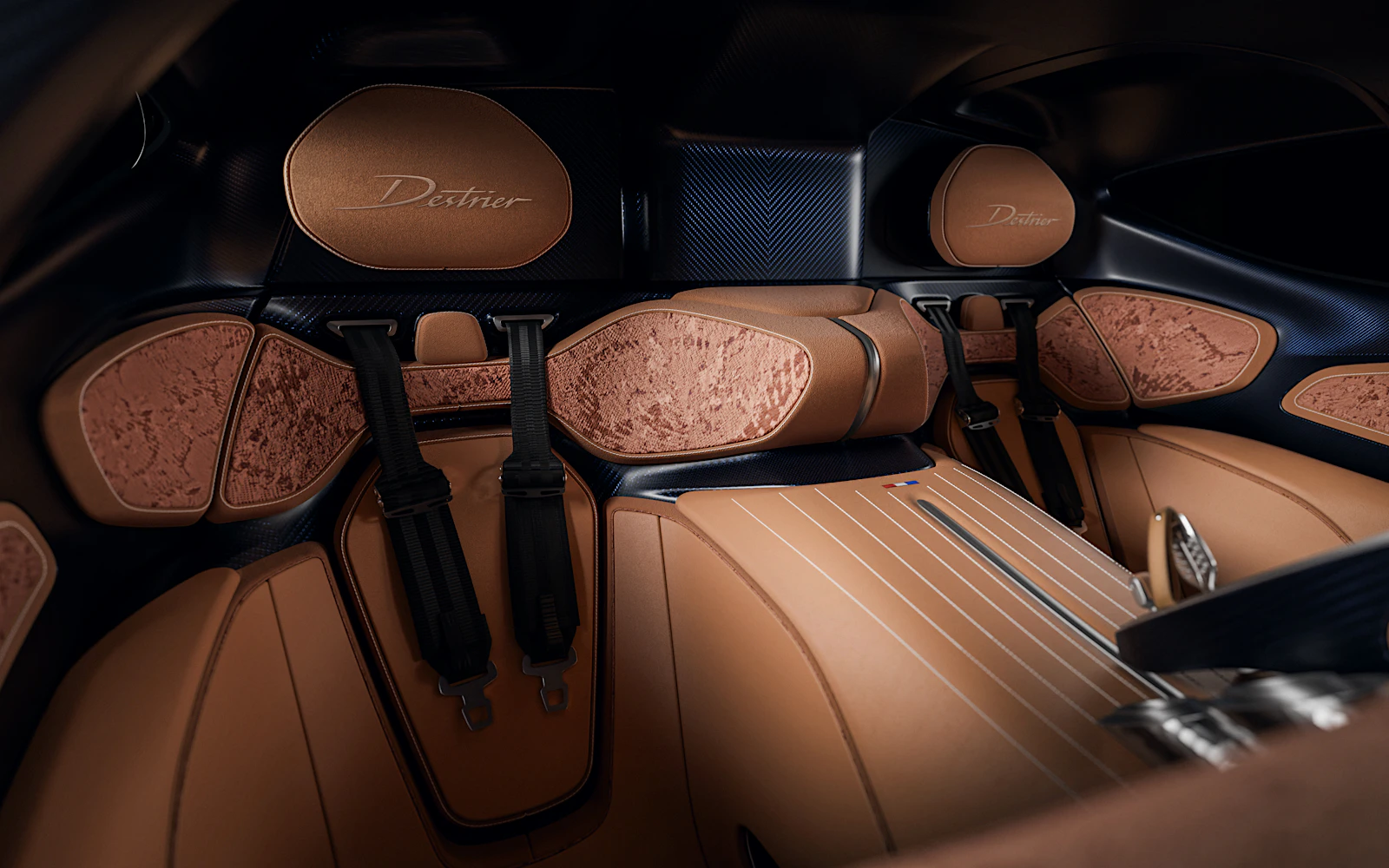
Contrasting stitch lines pick out each component's geometry, echoed in the headrest embroidery and the centre console.
At the heart of the cabin, a small French flag — a nod to the marque's origins.
The oil filler cap carries the Destrier emblem and its "1/1" designation — the mark of the third Solitaire.
Head and tail lamps use modern parametric patterns — the design language, continued in light.
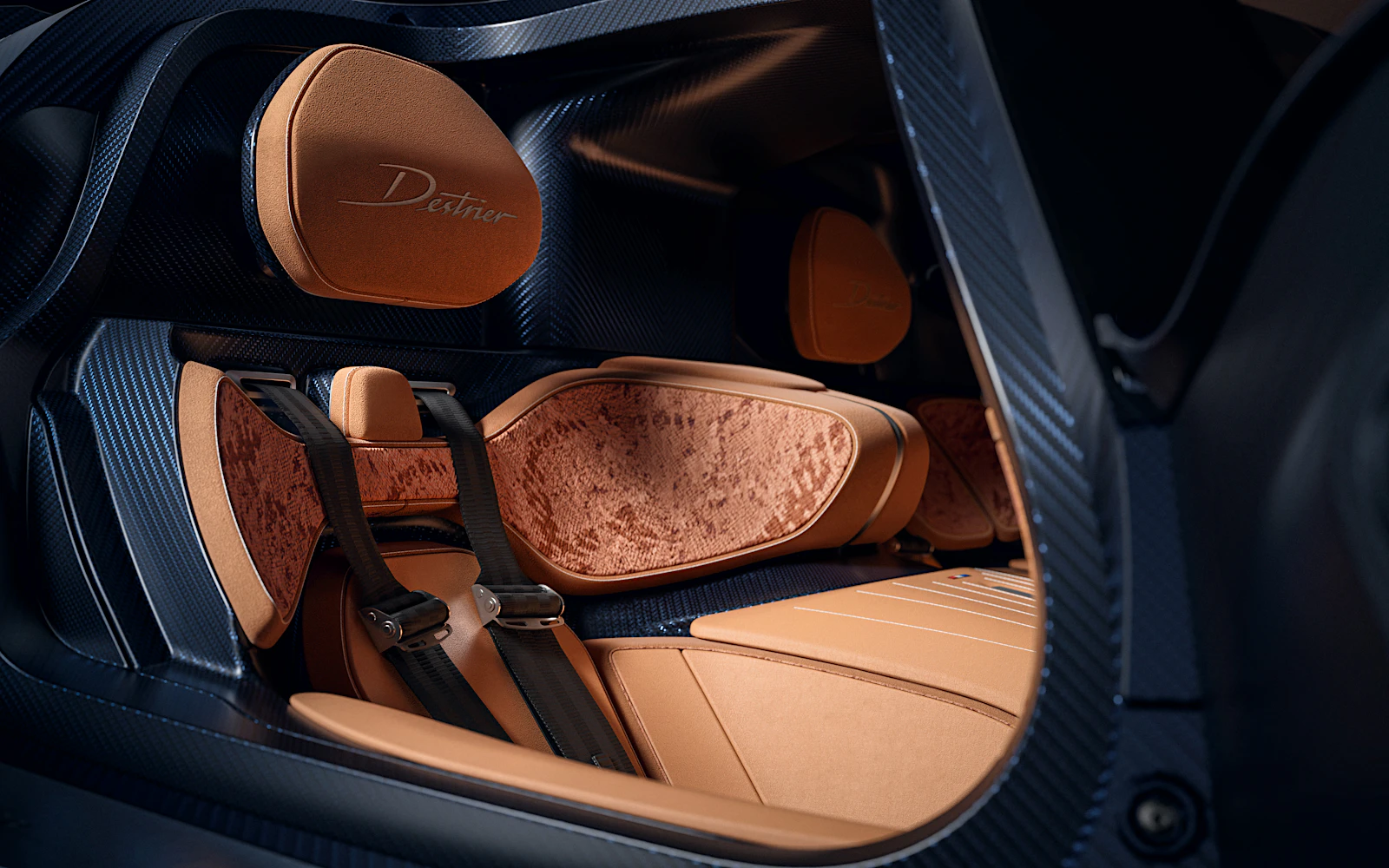
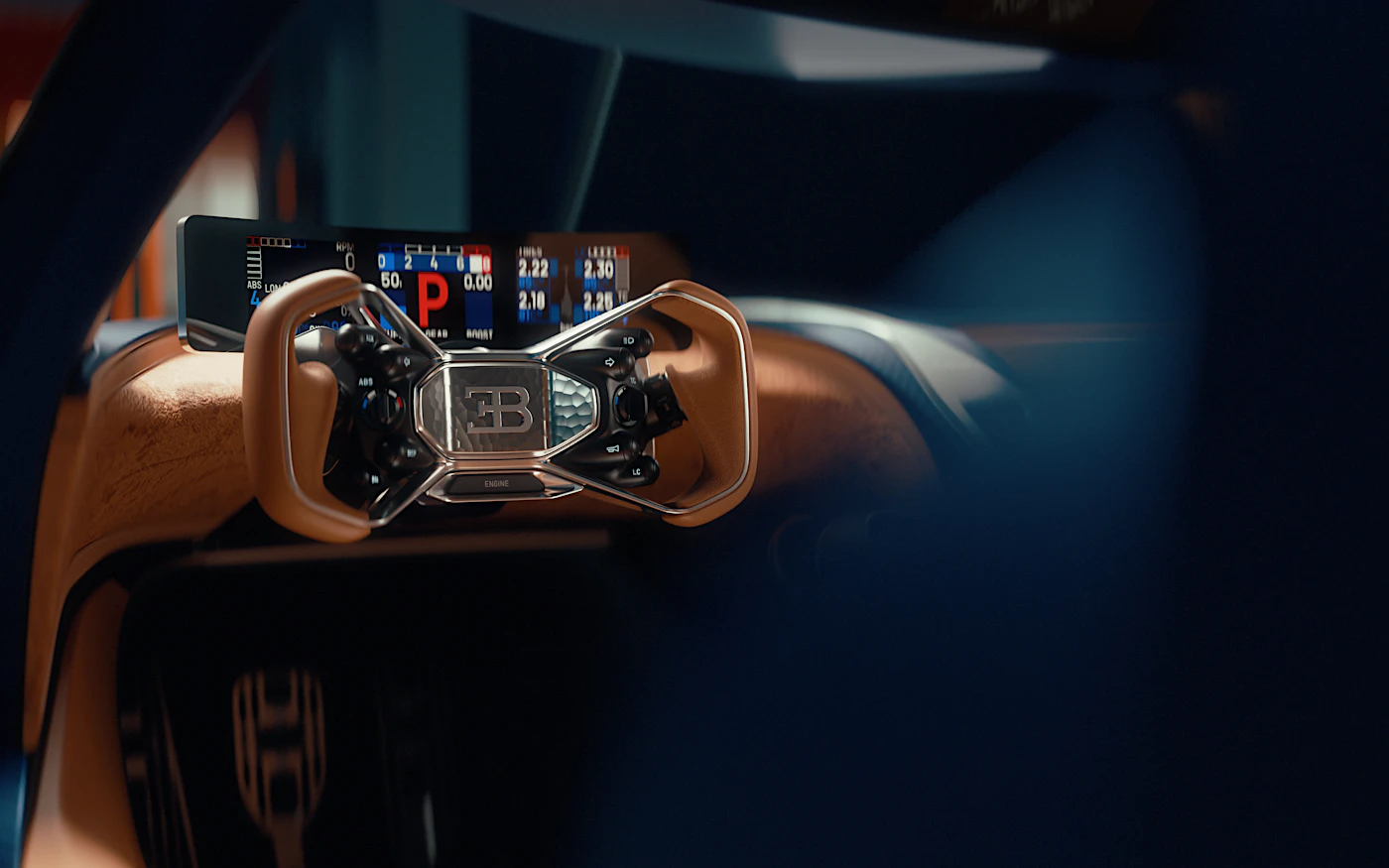
Nothing shouts. Every surface is measured, tactile, and made for one person alone.
The W16 beneath藏在车身下的 W16
A detail offered almost in passing: the Bolide's complete powertrain, unchanged.
Power
The W16 at its peak
Displacement
8.0-litre, mid-mounted
Cylinders
Sixteen, the W16 signature
Turbochargers
Quad-turbocharged
Like the great Concours-winning cars of the past, Destrier's story is one of proportion and craftsmanship, not outright performance.
Beneath the bodywork sits the Bolide's complete W16 — 1,600 PS, the quad-turbocharged 8.0-litre engine at the peak of its development. The only part of the car left untouched: because it needed no changes.
Sixteen cylinders, behind the quad exhausts
Behind the quad exhausts hides the W16 — two decades of Bugatti.

Just as the Type 57 chassis gave the world both a Le Mans winner and the Atlantic, one platform has now produced two entirely different masterpieces. I believe Destrier will be gracing Concours lawns 50 years from now.